

In 2022 – immediately after the beginning of Russia’s war of aggression against Ukraine – our volunteer work in support of refugees began. From one day to the next, we were confronted with a humanitarian challenge that demanded our full commitment, day and night. Many of us worked around the clock – at train stations, in initial reception centers, during visits to public authorities, or while searching for accommodation – often reaching the limits of our physical and emotional capacity.
What started as spontaneous help quickly developed into a vital pillar of civil society support. Countless volunteers organized transportation, accompanied refugees to administrative appointments, provided translation, arranged private housing, and, above all, offered guidance and human compassion in an exceptional and distressing situation.
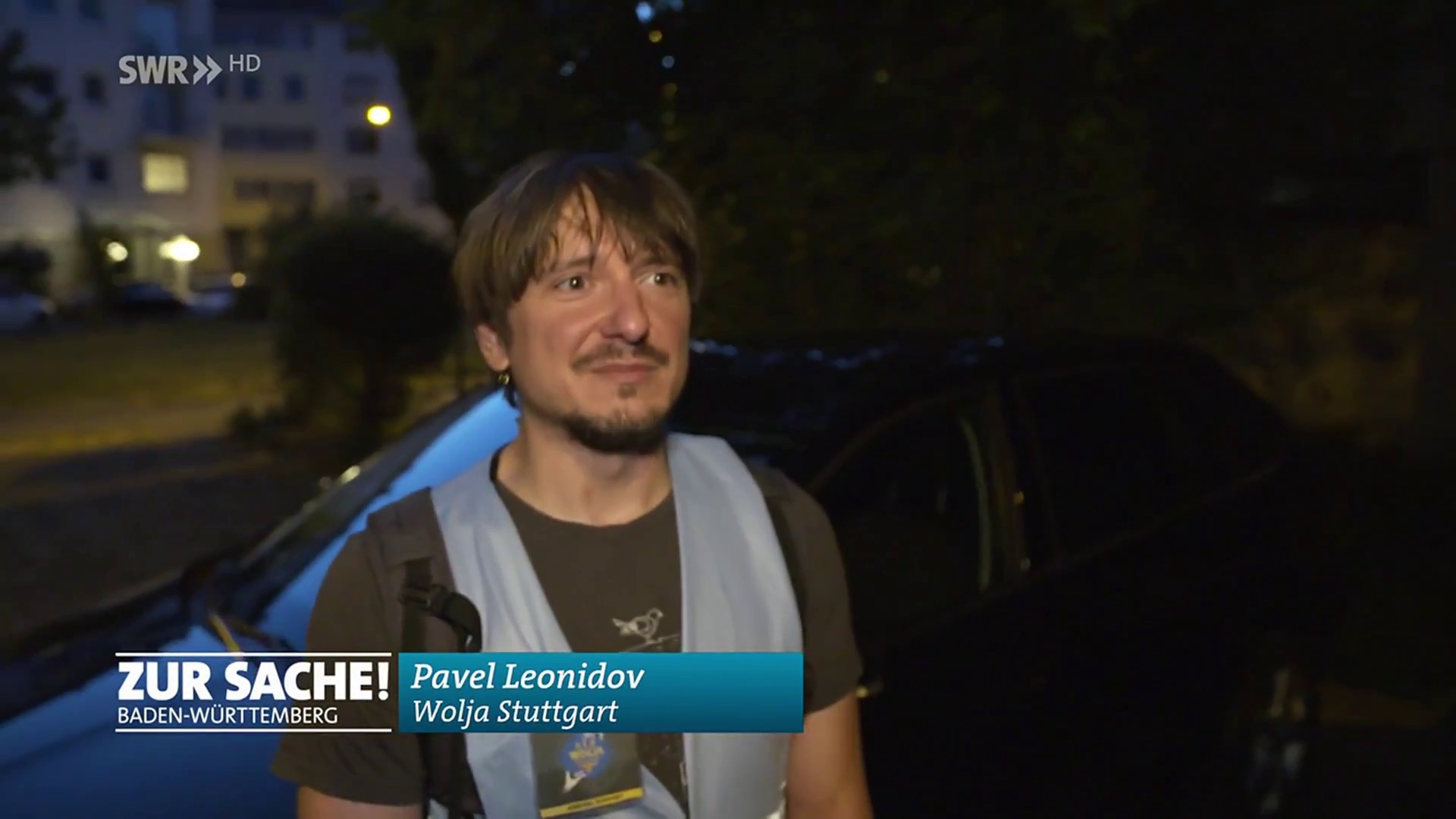
The regional broadcaster SWR highlighted this remarkable civic engagement in its program “Zur Sache Baden-Württemberg.” The report illustrated what practical, hands-on support looks like – direct, unbureaucratic, and driven by deep personal commitment. Among others, a television crew accompanied our member Pavel Leonidov during an operation to receive a mother and her son upon their arrival. The feature powerfully documented what many volunteers do every day: helping people arrive, creating a sense of safety, and guiding them through their first steps toward a new life.
At the same time, the program also addressed a development that affects many initiatives: as the war continues, the initial wave of solidarity has noticeably declined. Volunteer structures are reaching their limits, energy is being depleted, and private resources are becoming scarcer. While the need for support remains high, it is increasingly challenging to find enough people willing to take on long-term responsibility.
This makes it all the more important to keep this commitment visible – not only as a reflection on an extraordinary period of solidarity, but also as a call to sustain and strengthen that solidarity for the long term. Integration requires time, reliability, and people who are willing to continue taking responsibility.